For any Orlando business that relies on doors and storefront security, having a reliable emergency locksmith on speed dial changes everything. Over many jobs fixing everything from jammed mortise locks to failed access control panels I learned the patterns that signal durable service versus costly short-term fixes.
Why a Trusted 24 hour locksmith Orlando matters for Commercial security.
When a lock sticks at 7:00 a.m. Before a rush of customers, the cost is more than an annoyed manager. I once saw a small service contract balloon into thousands of dollars because cheap fixes kept failing and the underlying hardware was ignored. Good service limits downtime, enforces code-compliant repairs, and documents work in a way that facilities teams can budget around.
Common office lock failures and what they tell you.
Repeated key binding often signals a tolerance or alignment problem, while intermittent electronic failures typically point to power or firmware issues. Damage from a forced entry will look like bent strikes, split frames, or tampered cylinders and requires immediate secure repairs and sometimes upgrade to reinforced hardware. Practical experience shows the best savings come from the right intervention at the right time, not the cheapest immediate fix.
What to expect from a locksmith near me during an emergency callout.
When I answer after-hours calls I ask about the door type, observed symptoms, and any immediate safety concerns before committing to a method. The first task is securing the site if it is compromised, which may mean temporary reinforcement or a lockout of the affected access zone until a full repair is possible. You should be offered a transparent quote for either the immediate remedy or the permanent repair, and told if parts are likely required and how long they will take to arrive.
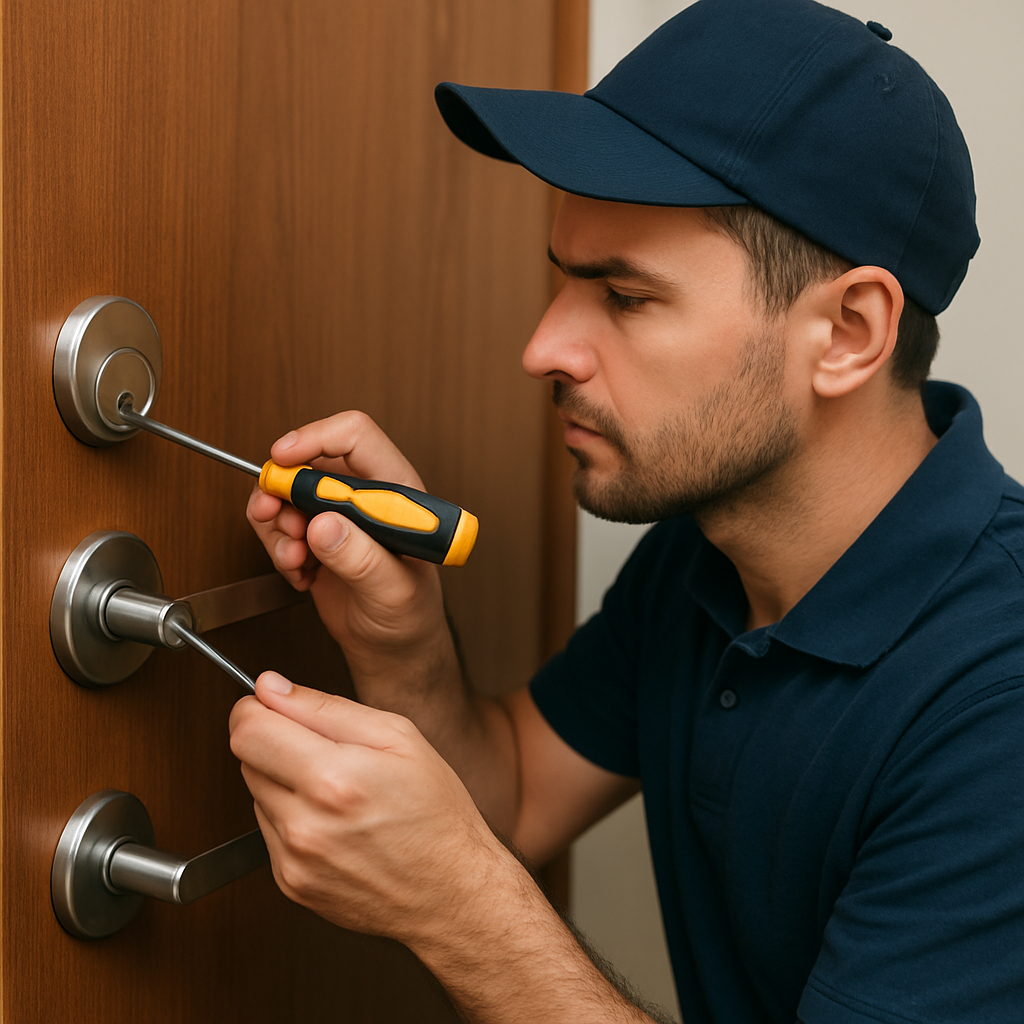
Choosing a Professional Orlando locksmith for commercial work
A locksmith experienced with commercial work knows about fire-rated doors, panic hardware, and ADA compliance, and those issues matter in public-facing businesses. Demand proof of insurance and ask for a commercial liability certificate before allowing on-site work, because accidents happen and you want the shop to cover them. A good company will offer scheduled maintenance contracts tailored to door counts and high-use points, and will show the logic behind the recommended frequency.
Maintenance strategies that stop most emergencies before they start
Routine checks reduce unexpected failures and extend the useful life of expensive hardware by years. In my experience walkthroughs that include a quick key rotation test, latch alignment check, and verification of panic hardware operation catch 70% or more of issues before they escalate. Maintenance contracts should be explicit about response windows, included parts, and exclusions, and a transparent provider will document all findings after each visit.
When to repair, when to rekey, and when to replace
Rekeying makes sense when keys are lost or staff turnover is high, because it keeps the installed hardware and removes unauthorized access cheaply. Rekeying a suite of 10 doors can be cost effective compared with replacing all cylindrical locks if the existing trim and cylinders are operational. If you plan to flip the lease in the short term, a measured repair or rekeying may be a better capital choice.
Access control and electronic systems: practical trade-offs
If you choose an online access control system, be prepared for firmware updates, credential management, and occasional electronic troubleshooting. When electricity is unreliable consider battery-backed controllers or mechanical fallback locks that allow safe egress and limited ingress until systems are restored. Security often fails not because of technology alone but because administrative processes were not designed to match the tool.
Handling forced entry and post-incident work with legal and insurance considerations
After a forced entry, the priorities are securing the site, documenting damage, and preserving evidence for police and insurance. Some insurers require licensed, bonded contractors for claims to be honored, so check the policy before authorizing significant work. After significant incidents schedule a full site audit to remove systemic vulnerabilities.
A practical checklist to evaluate a locksmith before you hire them
Confirm whether they provide a written invoice with serial numbers, warranty details, and maintenance recommendations. Request clarity on after-hours rates and travel fees so a late-night callout does not create sticker shock. A trustworthy shop will explain trade-offs rather than pushing the most expensive option.
Smart budgeting and contract tips for ongoing business coverage
Budget for preventive maintenance as part of your facilities costs rather than paying only for emergencies. Negotiate a fixed hourly rate for after-hours work or a capped callout fee to avoid surprises from single incidents. When comparing bids, normalize them by including labor, parts, permit costs, and any electrical subcontracting that might be required.
Final operational habits that preserve security and keep costs down
Train staff on reporting procedures for stuck doors and on who to call after hours, and keep a single emergency contact card at reception. I advise managers to test panic hardware monthly and to walk the perimeter doors once a week for loose screws, failing seals, and odd noises that precede mechanical failure. A smart lock program scales with business growth and keeps doors https://lockfixbmfa301.huicopper.com/transparent-locksmith-prices-in-orlando functioning smoothly so staff and customers never notice the effort behind the scenes.
Good security decisions come from combining practical field knowledge with clear administrative controls rather than from buying the fanciest hardware alone. With a few simple habits you can turn emergency locksmith calls into rare exceptions rather than routine interruptions.